
 8 members
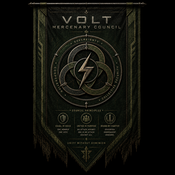
Volt Mercenary Council / VOLTMC
-
 Security
 -
 Freelancing
The Volt Mercenary Council is an alliance of sovereign mercenary forces, forged in war and bound by mutual defense. Independent of empire and corporation, we stand as equals—united by contract, strengthened by loyalty, and committed to collective strength. Together, we endure.
History
In the darkest years of the Vanduul War, when the frontier systems burned and supply lines collapsed under relentless assault, survival often depended not on empires—but on those willing to fight beyond their reach. It was in these conditions that the Kell Hounds and the Dark Wolves forged an unbreakable bond. On more than one occasion, both organizations deployed deep behind Vanduul lines, executing high-risk operations where failure meant annihilation and success meant buying humanity another day.
These joint campaigns were not sanctioned in the traditional sense. Cut off from reliable UEE command structures and operating far beyond corporate oversight, both units learned to rely on each other—not just for firepower, but for survival. In the vacuum of authority, trust became currency, and cooperation became doctrine. It was there, in the hostile void beyond the reach of law, that a realization took hold: mercenaries, divided, would always remain expendable. United, they could become something far greater.
By 2956, with the war exposing the fragility of centralized control and the growing influence of megacorporations over independent forces, both organizations foresaw a coming era—one in which mercenary groups would either unify under shared principles or be slowly absorbed, regulated, and controlled. Refusing subjugation, the Kell Hounds and Dark Wolves formalized their alliance, founding the Volt Mercenary Council as a new model of power: independent, cooperative, and equal.
At its core, the Council was never intended to be a governing body, but a framework—one that preserved the sovereignty of its members while enabling collective strength. This vision was codified in the Council’s founding Charter, which declared:
“We, the undersigned organizations, in pursuit of mutual sovereignty, strategic cooperation, and collective security, hereby establish the Volt Mercenary Council…”
The Charter established three unshakable principles. First, that every member organization retains absolute sovereignty over its forces, leadership, and operations. Second, that an attack against one member would be treated as an attack against all, ensuring mutual defense in an increasingly hostile galaxy. And third, that the Council itself would never become a ruling authority—but remain a body of equals, bound by cooperation rather than control.
Structured with equal representation, each member organization holds a single vote regardless of size or strength, reinforcing the Council’s foundational belief in balance over dominance. Decisions are made through deliberation and consensus, with supermajority and unanimous thresholds reserved for matters of critical importance—such as declarations of war or amendments to the Charter itself. This system ensures that no single power—military, economic, or political—can dictate the will of the whole.
Beyond governance, the Council also established clear doctrines for joint operations and resource sharing. Contracts may be executed collaboratively, with guaranteed compensation for supporting organizations, while breaches by external entities can escalate to coordinated enforcement—or, in extreme cases, unified war declarations. To sustain such actions, a shared treasury and war chest was created, funded by member contributions and reserved for large-scale conflicts requiring collective response.
Equally vital is the Council’s role in maintaining internal stability. Member disputes are brought before the Council for mediation, preventing internal conflict from weakening the alliance. Through arbitration, sanctions, or expulsion when necessary, the Council ensures that unity is preserved without compromising independence.
What began as a battlefield necessity between two elite mercenary forces has since evolved into a lasting institution—one built not on conquest, but on cooperation. The Volt Mercenary Council stands as a testament to a simple truth learned in war: alone, mercenaries are tools. Together, they are a force that answers to no one but themselves.L POLICIES MISSING ETA: TBD
Manifesto
OPERATIONAL POLICIES MISSING ETA: TBD
Charter
We, the undersigned organizations, in pursuit of mutual sovereignty, strategic cooperation, and collective security, hereby establish the Volt Mercenary Council. This Council exists to preserve the independence, interests, and operational freedom of each member organization, while providing a unified framework for alliance, dispute resolution, and coordinated action.
Article I – Foundational Principles
1. Sovereignty of Members
Each member retains full autonomy over its internal governance, assets, personnel, and operations. No action by the Council shall supersede this sovereignty except where explicitly agreed upon.
2. Mutual Defense and Collective Response
An attack against one member organization shall be considered an attack against all. All members agree to respond in accordance with the tactical landscape, available resources, and Council coordination.
3. Non-Subordination
The Council shall not function as a ruling authority over member organizations, but as a coordinating body of equals.
Article II – Membership
1. Eligibility
Any organization may petition for membership, subject to approval by a supermajority vote (two-thirds) of existing members.
2. Admission Requirements
Applicants must:
* Demonstrate operational capability
* Agree to all terms of this Charter
* Swear non-hostility toward existing members
3. Expulsion
A member may be removed by supermajority vote for violations of the Charter, acts of betrayal, or sustained aggression toward another member.
Article III – Council Structure
1. Representation
Each member organization shall appoint one primary representative and may appoint one alternate representative.
2. Alternate Authority
The alternate representative may act with full authority in the absence or incapacity of the primary representative.
3. Equal Standing
All representatives hold equal rank and authority within Council proceedings.
4. Council Sessions
Meetings shall occur at agreed intervals or during times of crisis as called by any member with sufficient support.
Article IV – Voting and Decision-Making
1. Voting Power
Each member organization holds one equal vote, regardless of size, wealth, or military strength.
2. Deliberation Period
Upon the introduction of a motion, a 24-hour deliberation period shall begin. During this time, representatives may: * Ask questions * Present counterarguments * Negotiate terms
3. Voting Window
Votes must be cast within the same 24-hour period unless an extension is approved by majority vote.
4. Decision Thresholds * Simple Majority (50% +1): Routine decisions * Supermajority (2/3): Membership changes, sanctions, major joint operations, and declarations of war * Unanimous Consent: Amendments to this Charter, actions affecting sovereignty
Article V – Jurisdiction and Authority
1. Scope of Authority
The Council may: * Mediate disputes between members * Coordinate joint operations * Establish shared rules of engagement
2. Limitations
The Council may not: * Command a member’s forces without consent * Interfere in internal governance * Seize assets or personnel * Poche personnel from a member’s forces
Article VI – Contracts and Resource Sharing
1. Joint Contracting
If a member organization requires assistance from another member organization to complete a contract, the assisting organization shall receive no less than 30% of the original contract value.
2. Terms of Engagement
Additional terms, including risk distribution, command structure, and operational control, may be negotiated separately but may not reduce the minimum compensation defined above.
3. Breach of Contract by External Entities
If a non-member entity enters into a contract with a member organization and fails to provide payment within the agreed-upon timeframe, the affected member may bring the matter before the Council.
4. Council Review
The Council shall review the claim and verify breach of contract. Upon confirmation, the Council may impose penalties, including sanctions or coordinated enforcement actions.
5. Declaration of War
If the breach is willful, substantial, and unresolved after Council intervention, a motion may be raised for a declaration of war against the offending entity. Such a declaration shall require a supermajority vote.
Article VII – Treasury and War Chest
1. Council Taxation
Each member organization shall contribute an annual tax equal to 10% of its internal profits to the Council treasury.
2. Separate War Chest
The Council treasury shall function as a collective war chest, separate from the individual reserves of each member organization.
3. Use of Funds
These funds shall be reserved for large-scale or unforeseen conflicts requiring unified action and additional shared resources.
4. Authorization of Use
Deployment of treasury funds shall require a supermajority vote of the Council unless immediate action is required for collective defense.
Article VIII – Conflict Resolution
1. Internal Disputes
Members agree to bring disputes before the Council prior to engaging in hostile action.
2. Binding Arbitration
If both parties agree, the Council’s ruling shall be binding.
3. Sanctions
Violations may result in: * Trade restrictions * Operational exclusion * Expulsion
Article IX – Amendments
1. Proposal
Any member may propose amendments.
2. Ratification
Amendments require unanimous approval unless otherwise specified.
Article X – Dissolution
The Council may be dissolved only by unanimous agreement of all member organizations.
Ratification
By signing below, each organization affirms its commitment to this Charter and its principles.
Signatories:
Organization Primary Representative Alternate Representative Date
The Kell Hounds Morgan_Finn_Kell BiJanca 4-28-2956
The Darkwolves Tacgnol Cheaters 4-28-2956