 3 members
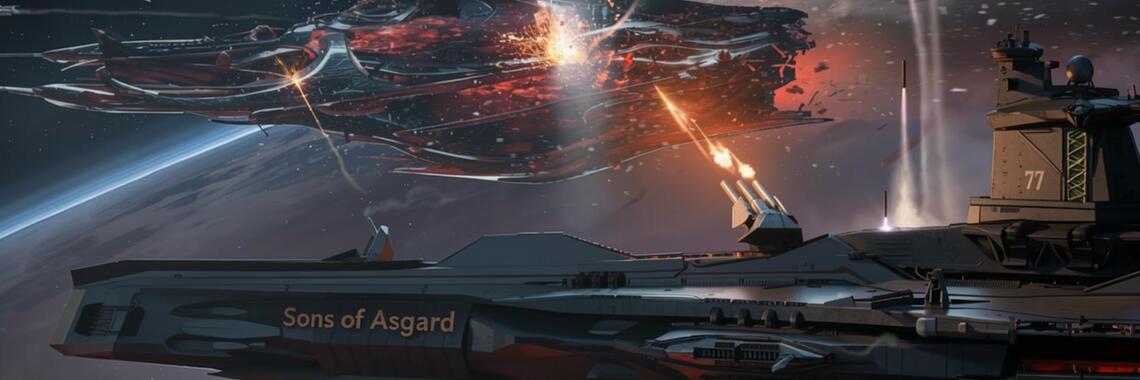
Sons of Asgard / ASGARDI
-
 Security
 -
 Exploration
“When the horns of Asgard call, we answer.”
History
The Beginning
In the last few decades of interplanetary expansion, humanity’s reach into the outer systems outpaced its ability to govern them. Mining colonies, research outposts, and trade routes stretched across fragile supply lines, and with distance came instability. Pirate factions, alien invasions, rogue corporate militias, and isolated insurgencies began to exploit the gaps between worlds. In response, a coalition of seasoned military personnel from human controlled worlds, orbital security commanders, and former special operations leaders—began to form informal defense pacts. What united them was not allegiance to any single nation, but a shared belief that order in the void could not be left to politics alone.
The Inspiration
Drawing inspiration from Norse mythology preserved in historical archives and cultural memory, the founders adopted a philosophy rooted in the virtues of the old gods: duty, sacrifice, honor, and unwavering protection of the innocent. They saw in the myth of Asgard not just a place, but an ideal—a bastion of order standing against chaos. From this vision, they established a unified command structure and began constructing a new kind of fleet: not tied to any one government, but sworn to humanity itself. Their ships set out to create order, and their doctrine emphasized restraint, lawful engagement, and the protection of civilian populations above all else.
The Decree
This organization would eventually be known as the Sons of Asgard, a centralized fleet and security authority operating across contested space. Built from repurposed warships, advanced carriers, and newly commissioned patrol vessels, the Sons of Asgard became both shield and mediator in the frontier. Their insignia—A tribute to Asgard itself—came to symbolize their mission: to hold the realm together against fragmentation. Though born from military necessity, they evolved into a stabilizing force, enforcing order not through conquest, but through the enduring principle that even in the vast silence of space, humanity must never be left without guardians.
Manifesto
Sons of Asgard — Manifesto of the Fleet
- We exist to preserve order where chaos spreads, and to ensure civilization does not fracture beyond reach.
- We are bound not to nations or corporations, but to humanity as a unified people across all realms.
- We uphold the Norse virtues of duty, honor, sacrifice, and resolve, not as myth, but as operational principle.
- We act as shield, not conqueror—force is only justified in defense of life, stability, and lawful order.
- We protect the innocent across all systems, regardless of origin, allegiance, or status.
- We enforce law with discipline and restraint, ensuring justice does not become vengeance.
- We accept that sacrifice is inevitable, but it must always serve the survival and stability of the many.
- We maintain readiness across all fronts: space lanes, colonies, and frontier systems are all under our watch.
- We reject corruption, fragmentation, and unchecked power, wherever it threatens civilian security.
- We remember always: from the void, we are the line between civilization and oblivion.
Charter
Sons of Asgard — Player Rules of Conduct
- Protect civilian players and non-hostile targets first. Don’t turn “security force” into random aggression.
- Keep fights clean and proportional. No overkilling, griefing, or unnecessary destruction.
- Act like part of a disciplined unit when you’re on duty—use clear comms and don’t clutter operations with chaos.
- Don’t attack allies, neutrals, or protected targets. Friendly fire and “just because I can” attacks aren’t tolerated.
- During missions, follow the chain of command. If someone is leading the op, stick to the plan unless told otherwise.
- Mission goals come first. Looting, wandering off, or personal side objectives shouldn’t derail group operations.
- Don’t sabotage other players or operations. If you break the group from the inside, you’re done.
- Be prepared when you join up—ships ready, gear sorted, and ready to deploy.
- Handle disagreements through leadership or after the mission, not in the middle of active engagements.