 7 members
Interstellar Mining & Ironworks Concern / IMICX
-
 Resources
 -
 Trading
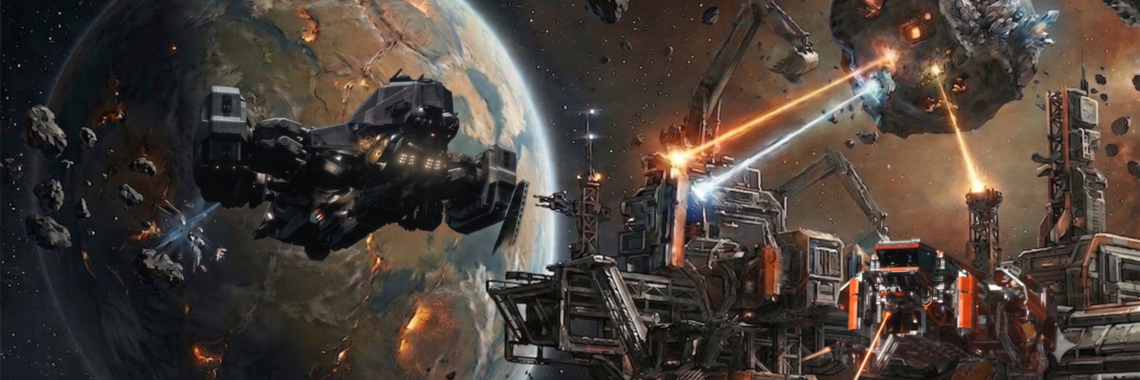
Founded in 2891, IMIC is a self-sustaining industrial titan. Built on the rugged Tri-Sector Doctrine, our fleet dominates deep-space mining, hull salvage, and high-volume hauling to manufacture refined goods for export. From frontier belts to corporate ports, we make the muscle that powers the verse
History
CORPORATE ARCHIVE: INTERSTELLAR MINING & IRONWORKS CORPORATION (IMIC)
- Classification: Integrated Resource & Logistics Conglomerate
- Founded: 2891 SET (Standard Earth Time)
- Primary Hub: Hurston Orbit / Stanton Sector
I. Foundations in the Rust (2891–2915)
IMIC did not begin in a sleek corporate boardroom on MicroTech. It was forged in the choked, smog-heavy atmosphere of Hurston.
Originally founded in 2891 as a minor subcontractor for Hurston Dynamics, the company—then a small collective of independent haulers and industrial laborers—was tasked with clearing out the catastrophic orbital debris fields left behind by Hurston’s early, unregulated weapons testing. Scraping twisted hull plating from abandoned prototypes, the founders quickly learned a fundamental truth of the verse: One corporation’s toxic waste is another enterprise’s fortune.
As their salvage fleets grew, the company aggressively reinvested its profits into heavy-duty extraction hardware, transitioning from mere salvagers to deep-crust planetary miners and orbital metal casters. By 2912, the collective formally organized under the banner of the Interstellar Mining & Ironworks Corporation (IMIC), breaking away from their Hurston contracts to claim independent stakes across the Stanton system.
II. The Tri-Sector Integration (2916–2940)
The true genius of IMIC’s corporate survival was the implementation of the Tri-Sector Doctrine. While rival companies specialized in only one discipline—failing when market commodity prices fluctuated—IMIC built an unbroken, closed-loop supply chain.
[ Mining/Salvage division ] ──> [ Manufacturing division ] ──> [ Logistics division ]
(Raw Mining and Salvage)———-(Refinement and Crafting)———-(Mass Freight Hauling)
If the market value of raw Quantanium or iron ore dropped, IMIC shifted its massive fleet of Aegis Reclaimers to pick clean the battlefields of UEE Navy skirmishes. If salvage rights became locked in bureaucratic red tape, the Hull-Cs and Starlifters of the Logistics Division kept corporate profits afloat by undercutting local shipping lanes. Every division fed the next. IMIC became entirely self-sustaining.
III. Pushing the Frontier (2941–Present)
When the Jump Point to the lawless Pyro system was stabilized, most corporate entities pulled back, terrified of pirate syndicates and the volatile, dying star. IMIC saw an untouched goldmine.
Deploying heavily armored mining platforms and deep-space salvage operations right into the teeth of low-security space, IMIC established its reputation as a gritty, unyielding powerhouse. They proved they could operate anywhere—whether navigating the strict, bureaucratic corporate docks of Area18 or cracking volatile asteroid belts under the radioactive glare of Pyro.
Today, [IMIC] stands as a beacon of blue-collar excellence and corporate muscle. From the smallest Prospector scanning a lonely moon to the massive Hull-D freighters burning through the quantum grid, IMIC moves the materials that build the future.
Corporate Motto: “The Verse provides the mass. We provide the means.”
Manifesto
Listen to the comms chatter long enough and you’ll hear the mega-corps talk about their grand visions for the UEE, about expanding territories and building shining new landing zones. But you won’t hear them talk about the grease, the radiation, or the broken knuckles it takes to actually get it done. They like to pretend the universe just builds itself.
We know better. IMIC was born in the choke and rust of the Hurston yards, pulling broken hull plating out of the dirt just to earn our next quantum drive. We didn’t survive by waiting for corporate handouts or playing nice in the boardroom. We survived because we learned how to take the raw, brutal mass of the verse and bend it to our will.
That means we don’t just scratch the surface of a star system and move on. When our miners crack an asteroid open out in the black, we extract every ounce of worth from the rock. And when we find a dead vessel drifting in that same debris field, our salvage crews are already moving in to strip the hull bare. To us, an unrefined mineral vein and a wrecked capital ship are the exact same thing: raw potential. We bring it all back to our refineries, forge the materials into high-grade commodities ourselves, and let our hauling fleets burn through the jump points to dominate the export markets. We own the whole pipeline, and we protect it with everything we’ve got.
Let the politicians and the executives have their clean suits and their orbital high-rises. Our home is on the bridge of a heavy freighter, in the cockpit of a mining rig, and out on the hull of a drifting wreck under the harsh glare of a frontier star.
We don’t just follow the supply lines. We forge them. If you’re tired of carrying the weight for bosses who don’t know your name, climb aboard. We’ve got rocks to crack, ships to strip, and a fortune to build.
Charter
IMIC OPERATIONAL CHARTER
Article I: Core Mandate
- The Interstellar Mining & Industry Concern operates as a fully integrated, self-sustaining industrial collective. Every member of IMIC is a vital link in a single chain. Our primary objective is the extraction, reclamation, refining, and mass transport of industrial goods across UEE and frontier space. We pull wealth from the dark, forge it into commodities, and secure the profit for the collective.
Article II: Fleet Code of Conduct
- Professionalism in the Black: We are a blue-collar operation, but we run a tight ship. Members are expected to operate their hulls efficiently, follow flight discipline during fleet ops, and respect the chain of command when a job is underway.
- Protect the Pipeline: An attack on one IMIC hull is an attack on the entire fleet. Whether you fly a Prospector, a Vulture, or a Hull-C, we protect our own. Combat pilots or escort assets attached to an industrial operation are expected to hold the line to secure our haul.
- Frontier Discretion: We operate in both corporate sectors and low-security space like Pyro. While we are a legitimate manufacturing concern, survival on the frontier requires flexibility. Members will prioritize the safety of the crew and cargo above corporate red tape.
Article III: Operational Divisions
To maintain our integrated supply chain, IMIC is divided into three co-equal operational arms. Members may hold certifications or fly in multiple divisions:
- Extraction & Reclamation Division (Mining & salvage): Responsible for raw material scouting, asteroid cracking, and deep-crust planetary mining operations.
- Refinement & Manufacturing Division (Refinement & Manufacturing): Responsible for hull scraping, structural fracturing, and battlefield component recovery.
- Logistics Division (Hauling): Responsible for processing raw assets at refinery decks, managing supply lines, and running high-volume cargo transport to export markets.
Article IV: Economy & Profit Splitting
- Organized Operations: For official fleet operations (e.g., multi-crew Reclaimer or Orion runs), profits are calculated after covering operational costs like fuel, ammo, and refining fees.
- The Cut: Net profits from fleet jobs are split evenly among all participating crew members, with a dedicated percentage set aside for the Org Treasury to fund capital ship logistics, fuel reserves, and member insurance rebuys.
- Solo Operations: What you do on your own time is your own business. Independent operators keeping 100% of their solo hauls are fully supported, provided their activities do not bring conflict to the Org banner.