 2 members
Pad Sweepers Anonymous / PADS
-
 Freelancing
 -
 Trading
Pad Sweepers Anonymous is a collective, a co-op of sorts, of people who don’t want to stand out, don’t want to take the limelight. We work tirelessly in the dark to keep your pads clean and tidy. Our goal is to make servers healthier one pad at a time. www.PadSweepers.com
History
Pad Sweepers Anonymous began as a quiet act of rebellion.
For years, disabled and abandoned ships throughout Stanton were treated as opportunities for profit rather than hazards that needed to be cleared. Corporate recovery firms left wrecks sitting on public pads until their owners paid inflated removal fees. Salvage contractors fought over claims while station authorities issued fines faster than they cleared landing zones. Some crews even whispered that certain recovery companies deliberately delayed assistance—or quietly helped ships become disabled—so they could charge for the cleanup afterward.
The result was always the same: blocked pads, stranded pilots, and landing zones made less safe while corporations argued over who owned the wreck.
The original Pad Sweepers were employees of one such recovery company. They were tug operators, mechanics, salvage workers, and deck crews who had grown tired of watching legitimate recovery work become another form of extortion. The final break came after management ordered them to leave several disabled civilian ships untouched because their owners could not afford the company’s fees.
The ships remained on the pads for days. Traffic backed up, tempers rose, and pilots were forced to risk increasingly dangerous approaches while the company waited for desperation to raise the price.
The crews ignored the order.
Working off the clock and without authorization, they cleared every ship. Anything repairable was delivered to independent mechanics. Useful components from unrecoverable wrecks were returned to their owners or passed along to settlements that needed them. By morning, the pads were open again.
By midday, every member of the recovery crew had been fired.
They called themselves Pad Sweepers Anonymous because no single founder wanted credit, ownership, or authority over what they had started. There would be no executive board, no shareholders, and no distant office deciding whether someone was worth helping.
But “Anonymous” was never just a statement of humility.
In Stanton, unauthorized pad clearing is still treated as theft, unlawful salvage, interference with station operations, and—when corporate property is involved—sometimes organized piracy. It does not matter that a ship has been abandoned for days or that it is blocking the only usable landing pad. Unless the right corporation has issued the right contract and collected its fee, moving it can make the recovery crew criminals.
To the Sweepers, the choice is simple: when corporate law protects an abandoned wreck more fiercely than the people endangered by it, doing the right thing means becoming an outlaw.
They do not stay anonymous because they are ashamed of the work.
They stay anonymous so they can keep doing it.
The PSA Promise
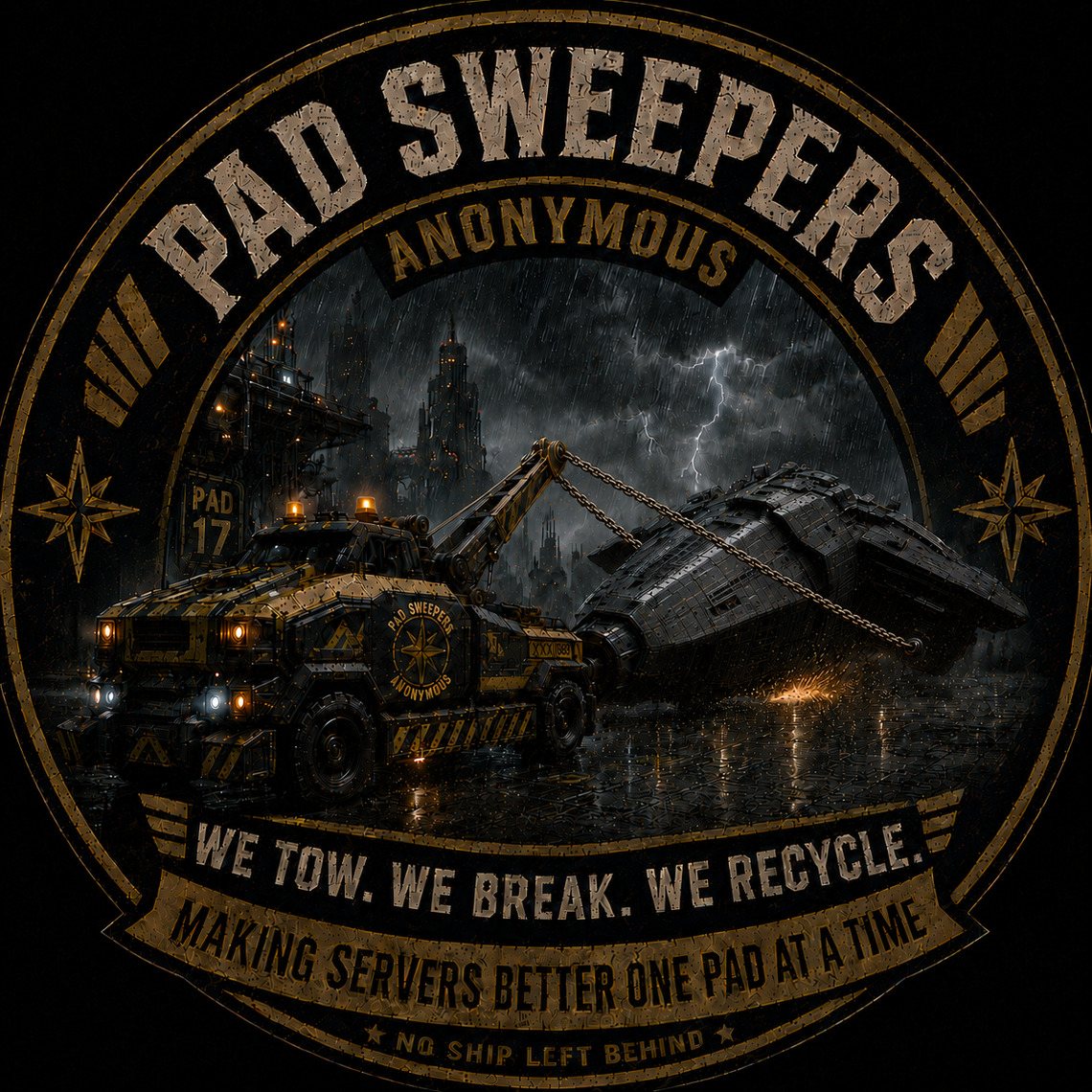
We tow. We break. We recycle.
Making servers better, one pad at a time.
No ship left behind.
Manifesto
Page Under Construction. Please check back soon!
Charter
Members of Pad Sweepers Anonymous shall abide by the following:
Service Before Profit
We clear wrecks for the good of the systems in which we operate. Any payment or salvage received exists only to support continued operations.
No Exploitation
We do not prey upon stranded pilots, create artificial fees, withhold assistance, or use blocked pads for personal gain.
Confirm Abandonment
We will make every reasonable effort to verify that a ship is abandoned before towing, salvaging, or dismantling it. Ships actively being used, recovered, or defended by their pilots are not legitimate targets.
Respect Pilots and Property
When an owner can be identified, we will attempt to contact them and favor recovery over destruction whenever practical.
Respond to Obstructions
When notified of blocked or overcrowded pads, we will make a reasonable effort to respond and clear the area in a timely manner.
Leave the System Better
We operate responsibly, avoid unnecessary damage, and return useful materials to circulation whenever possible.